

The Neurodivergent Guide to Buying and Selling Real Estate in Scottsdale, Arizona
Buying or selling a home is universally listed among life’s most stressful events. But for the neurodivergent community—including adults with Autism Spectrum Disorder (ASD), Attention Deficit Hyperactivity Disorder (ADHD), Obsessive-Compulsive Disorder (OCD), Sensory Processing Sensitivity, and C-PTSD—the traditional real estate process doesn't just feel stressful. It feels explicitly hostile.
From the relentless phone calls and surprise pop-ins to the overwhelming sensory environment of open houses and the high-pressure sales tactics designed to trigger decision fatigue, standard real estate operations were built by and for neurotypical nervous systems.
If you are an AuDHD, autistic, or neurodivergent homebuyer or seller in Scottsdale, Phoenix, or the greater East Valley, you do not have to mask your way through a real estate transaction. You do not need to force yourself into high-stimulus communication channels, tolerate manufactured urgency, or navigate intrusive social expectations just to secure a place to live.
This comprehensive guide breaks down how to navigate the Arizona real estate market on your own terms—focusing on neuro-affirming services, sensory-conscious property evaluation, asynchronous communication, and radical transparency.
Why Traditional Real Estate Fails Neurodivergent Clients
The traditional real estate industry is anchored in volume-driven sales models. Standard practice relies heavily on high-touch social interactions, immediate verbal responsiveness, and psychological pressure techniques like artificial deadlines. For someone navigating executive dysfunction, sensory overload, or trauma-based hypervigilance, these industry norms create unnecessary barriers to housing access and financial security.
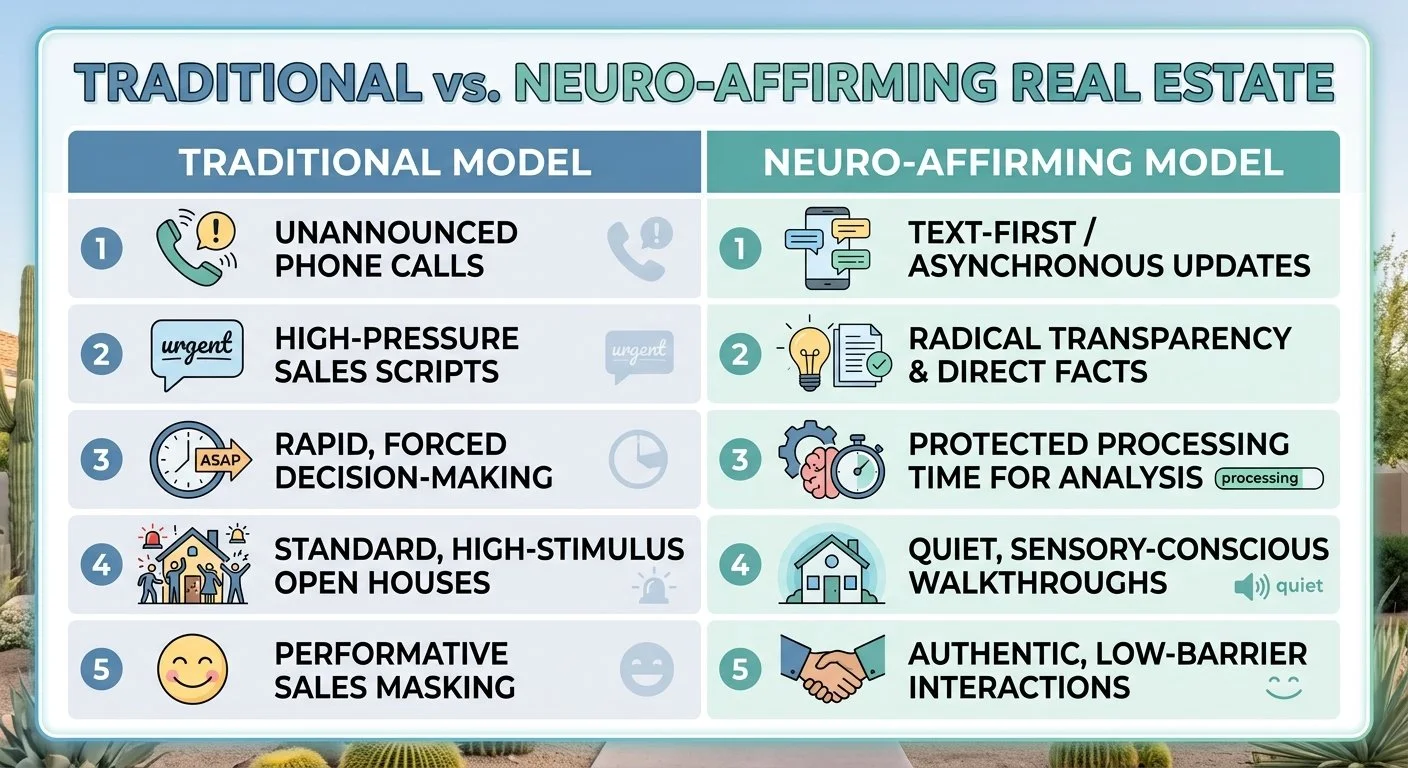
1. High-Stimulus Communication and Interruption Culture
Traditional real estate agents are taught to pick up the phone instantly and make constant cold or warm calls. For autistic adults or people with ADHD, unannounced phone calls disrupt focus, induce acute anxiety, and demand immediate verbal processing without time to reflect. High-frequency, low-information phone calls create severe communication burnout.
2. Open House Chaos and Sensory Overload
Standard home tours and public open houses are sensory landmines. Artificial staging scents, harsh fluorescent lighting, echoing open-concept architecture, undisclosed pet dander, and small talk with stranger agents force neurodivergent buyers to expend all their mental energy managing sensory input rather than evaluating the structural integrity and layout suitability of the home.
3. Manufactured Urgency and Decision Fatigue
The standard sales playbook relies on urgency: "Offers are coming in fast!" or "If you don't sign this draft right now, you'll lose out!" For individuals with OCD, hypervigilance, or processing differences related to AuDHD, artificial pressure triggers fight-or-flight responses. It forces buyers to sign contracts before they have had adequate time to analyze details, evaluate financial disclosures, or systematically process risk.
4. Masking and Social Friction
Neurodivergent individuals frequently feel forced to "mask"—suppressing natural autistic traits, stimming, or honest communication styles—to fit the expected corporate decorum during agent meetings, seller negotiations, and lender consultations. Masking throughout a 30-to-60-day real estate escrow period leads directly to severe burnout.
What Is Neuro-Affirming Real Estate?
Neuro-affirming real estate is an approach to residential property representation that explicitly respects, accommodates, and adapts to brain-based differences. It abandons traditional sales scripts and high-pressure tactics in favor of structural accessibility, clear boundaries, and trauma-informed advocacy.
Instead of expecting the client to adjust their nervous system to fit the real estate transaction, a neuro-affirming practice adjusts the transaction framework to fit the client’s cognitive style and sensory profile.
Key Pillars of a Neuro-Affirming Real Estate Practice
Asynchronous-First Communication: Primary communication takes place via documented text messages, structured email summaries, or low-pressure voice notes. You receive clear written data that you can review on your own schedule without needing to perform real-time phone conversations.
Sensory-Conscious Property Audits: Evaluating homes goes beyond counting bedrooms and bathrooms. A sensory-conscious audit examines acoustic insulation, natural lighting angles, neighborhood ambient noise profiles, HVAC vibration levels, layout flow, and environmental triggers.
Radical Transparency: No sugarcoating market dynamics, hiding structural red flags, or using emotional manipulation. You receive unvarnished facts, straightforward contract breakdowns, and practical risk assessments.
Autonomy and Protected Processing Time: Eliminating artificial stress so you have the psychological safety needed to read contracts, consult your support network, and make informed choices without feeling pushed.
The Client Care & Communication Preferences Questionnaire
The cornerstone of a personalized, neuro-affirming transaction is establishing explicit operational boundaries before searching for properties or listing a home for sale. This is accomplished through a specialized Client Care & Communication Preferences Questionnaire.
Rather than assuming every client communicates or processes information the same way, this intake process maps out your exact operational preferences.
What the Questionnaire Covers:
1. Preferred Communication Channels: Specifying whether you prefer text messages, detailed emails, async video recaps, or scheduled, time-boxed phone calls.
2. Notification Boundaries: Setting strict "do not disturb" windows for updates to ensure real estate news does not disrupt your work focus or rest.
3. Sensory Sensitivity Profiles: Documenting explicit triggers such as specific types of lighting, strong fragrances, specific neighborhood noise profiles, or crowded open houses.
4. Information Density Preferences: Indicating whether you prefer high-level executive summaries, deep-dive data spreadsheets with complete documentation, or visual step-by-step checklists.
5. Pacing and Processing Time: Establishing how much time you need to review documents before discussions, ensuring zero surprise deadlines.
By establishing these parameters up front, your real estate advocate manages contract negotiations, seller interactions, escrow deadlines, and inspection scheduling around your documented needs.
Sensory-Conscious Home Buying in Scottsdale and the Phoenix East Valley
When buying a home in Scottsdale, Paradise Valley, Tempe, Mesa, or Phoenix, standard listing details leave out critical sensory data. A house can look perfect in high-end real estate photography, but be sensory-hostile in daily life.
A neuro-affirming home search evaluates real estate through a specialized sensory lens across several key categories:
Acoustic Environment and Privacy
Sound pollution is a major driver of chronic sensory overload and nervous system fatigue. Sensory-conscious property evaluation looks at:
Road Noise Proximity: Proximity to major Scottsdale arteries (e.g., Loop 101, Shea Blvd, Frank Lloyd Wright Blvd) and traffic noise patterns during peak commute hours.
Interior Acoustic Profile: Vaulted ceilings, hard tile floors, and open floor plans create severe echo chambers. We evaluate wall density, insulation type, and spatial layout to ensure sound dampening can be easily achieved.
HVAC and Mechanical Noise: Evaluating the decibel levels and physical vibration of heat pumps, central air conditioning units, pool pumps, and refrigeration systems.
Lighting and Sightlines
Natural light plays a critical role in circadian rhythm regulation and mood management, particularly for AuDHD and autistic individuals managing seasonal changes or light sensitivity.
Sun Exposure and Solar Heat Gain: In Arizona, window orientation matters immensely. North/South exposure provides consistent, soft ambient natural light without extreme heat gain or blinding glare. Direct East/West exposure creates intense harsh glare and high cooling costs.
Artificial Lighting Fixtures: Identifying existing fluorescent fixtures, flickering LEDs, or missing dimmers that require replacement with warm, dimmable smart lighting.
Environmental Triggers and Air Quality
Fragrance and Residual Odors: Assessing whether a listing uses artificial plugin scents, heavy cleaning chemicals, or has lingering pet, smoke, or mold odors that trigger sensory distress or physical migraines.
HVAC Filtration Systems: Reviewing furnace and AC ducting quality, filter accessibility, and potential for upgrading to high-efficiency HEPA or filtration setups suited for desert dust and pollen.
Spatial Flow and Executive Dysfunction Support
A home's floor plan either supports or obstructs daily executive function.
Drop Zones and Organization: Evaluating entryways for intuitive storage ("drop zones") to prevent clutter accumulation that triggers overwhelm for people with ADHD or OCD.
Zoning and Quiet Spaces: Ensuring clear physical separation between high-activity social zones (kitchen/living areas) and quiet recovery zones (bedrooms/home offices).
Navigating the Arizona Real Estate Transaction Without the Noise
The legal paperwork and escrow process in Arizona involves detailed state-mandated disclosures, purchase contracts, inspection periods, and loan approvals. For neurodivergent buyers and sellers, executive dysfunction or information overload can turn paperwork into a major hurdle.
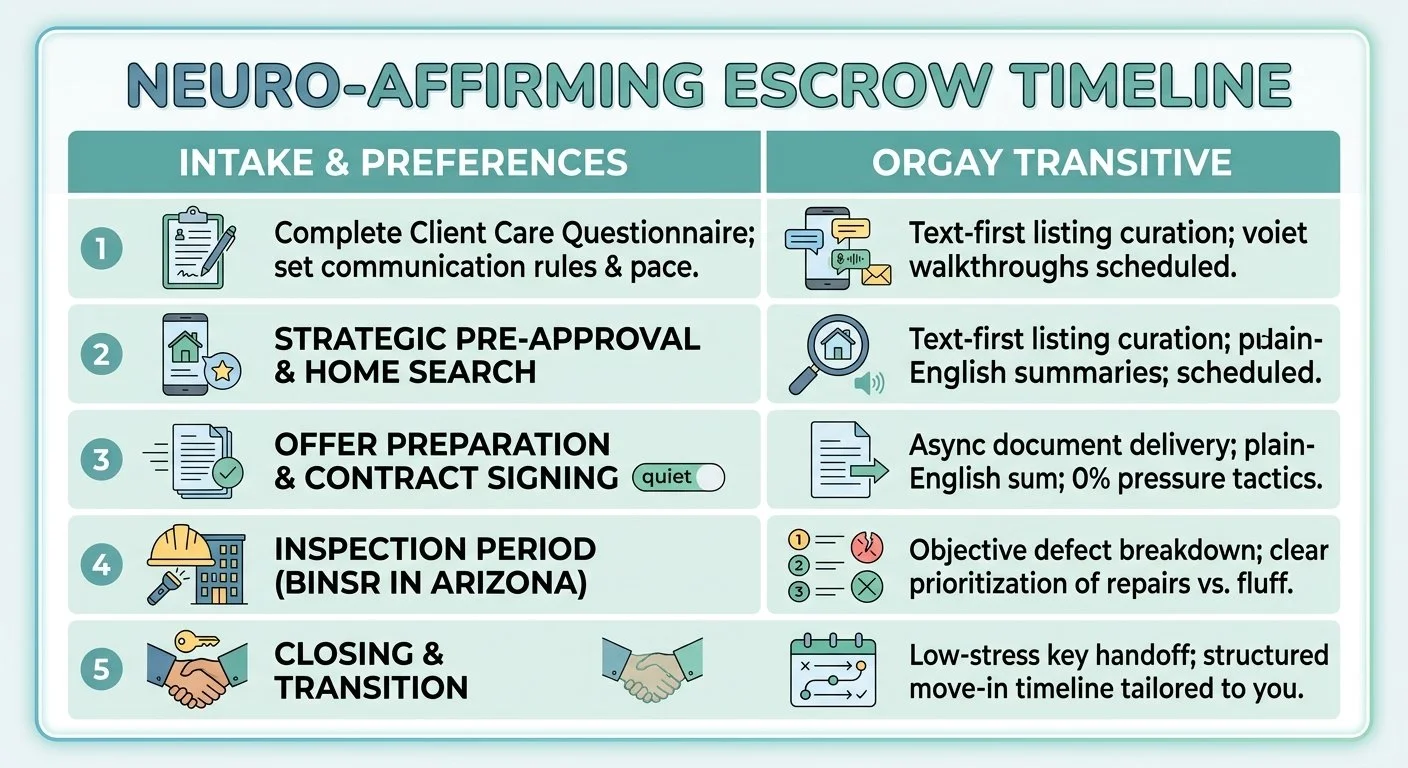
A neuro-affirming practice breaks down the standard Arizona residential real estate transaction into clear, manageable steps:
Step 1: Low-Barrier Consultation
No forced high-pressure sales presentations over coffee. You complete your preferences intake asynchronously or via a short, structured interaction focused entirely on your housing criteria, ideal communication format, and timeline.
Step 2: Sensory-Friendly Home Searches
Listing options are pre-screened to filter out major sensory dealbreakers before you ever travel to see a house in person. When touring homes:
Walkthroughs are scheduled during low-traffic hours.
No rush, no pushy sales chatter while you process the space.
Direct feedback is encouraged—if a home smells wrong, feels loud, or has bad energy, we leave immediately without debate.
Step 3: Plain-English Contract Reviews
The standard Arizona Association of Realtors (AAR) Residential Resale Real Estate Purchase Contract is a 10-page legal document packed with real estate jargon.
Contracts are provided with clear, side-by-side plain-English summaries highlighting critical deadlines, financial commitments, contingency clauses, and earnest money rules.
Digital signing links are delivered asynchronously, giving you space to review documents thoroughly in a calm environment.
Step 4: The Inspection Period (BINSR)
In Arizona, buyers typically have a 10-day Inspection Period to evaluate the physical condition of the property and submit the Buyer’s Inspection Notice and Seller’s Response (BINSR).
Inspection reports are categorized systematically: Critical Structural/Safety Issues vs. Minor Cosmetic Repairs.
Repairs are negotiated clearly without unnecessary drama or emotional posturing.
Step 5: Structured Closing and Transition Support
The period between contract acceptance and closing can trigger significant uncertainty. You receive structured visual checklists outlining upcoming steps (appraisal, title commitments, utility setup, final walkthroughs) so you always know what is coming next.
Neurodivergent Real Estate FAQs for Scottsdale & Phoenix
Is it legal for a real estate agent to specialize in serving neurodivergent clients?
Yes. Specializing in serving autistic, AuDHD, or neurodivergent clients—or specializing in sensory-conscious property audits—is fully legal under federal and state Fair Housing laws. Under the Fair Housing Act, real estate professionals cannot discriminate against any protected class or refuse service to anyone. Offering specialized accommodations, accessible communication formats, and sensory property evaluations enhances accessibility for neurodivergent clients while maintaining equal housing opportunity for all clients.
What areas of Arizona do you serve?
Neuro-affirming real estate services are offered throughout Scottsdale, Phoenix, Paradise Valley, Tempe, Mesa, Chandler, Gilbert, Fountain Hills, and surrounding Maricopa County communities.
I'm neurotypical, but I hate pushy real estate agents and phone calls. Can I still work with a neuro-affirming agent?
Absolutely. While services are explicitly designed to accommodate neurodivergent nervous systems, anyone who values text-first communication, radical transparency, zero sales pressure, and quiet pacing can utilize this service model.
How do quiet walkthroughs work?
Quiet walkthroughs are private home tours structured to minimize sensory clutter and pressure. We schedule tours outside peak open house hours, avoid high-traffic times, give you space to experience the layout without continuous commentary, and focus on physical property traits like acoustic insulation, natural light, spatial layout, and environmental factors.
How does a text-first real estate practice work during negotiations?
During active contract negotiations, key contract updates, counteroffers, strategy options, and line-item summaries are delivered via clear written channels (text, email, or documented client portals). If a rapid decision is required by market deadlines, you receive concise, bulleted choices outlining options, risks, and next steps so you can respond calmly without taking unannounced phone calls.
Selling a Home as a Neurodivergent Homeowner in Arizona
Selling a home requires opening your private living environment to strangers, which can disrupt established routines and trigger acute sensory and privacy distress. A neuro-affirming listing process mitigates these stressors through strategic planning:
Controlled Showing Windows: Setting strict, predictable blocks of time for home showings that fit around your personal schedule, routine, and sensory needs—eliminating random, last-minute interruptions.
No Public Open House Requirement: Public open houses are optional. Many homes sell successfully through targeted digital marketing, high-end virtual tours, and pre-screened private buyer showings, protecting your home's privacy.
Clear Home Prep Checklists: Instead of overwhelming you with endless home prep suggestions, you receive a prioritized, step-by-step list of high-ROI tasks focusing only on what truly impacts contract value.
Asynchronous Offer Reviews: Offers are organized into clear comparison tables showing net proceeds, contingency timelines, buyer financing strength, and closing dates, allowing you to compare options side-by-side without high-pressure verbal pitches.
Giving Back: Supporting Local Arizona Sanctuaries
Real estate transactions should build up local communities. A core pillar of this practice is direct community support: a portion of every closed real estate transaction goes directly to support local non-profit organizations and animal sanctuaries, including Suncatcher Sanctuary.
Supporting local animal rescue efforts provides safe, compassionate spaces for animals in need, mirroring our broader mission to create safe, low-stress harbor environments for humans navigating major life transitions.
Ready to Navigate Arizona Real Estate on Your Own Terms?
You do not need to alter your communication style, compromise your boundaries, or mask your way through buying or selling a home in Scottsdale or the Phoenix metro area.
Whether you are ready to start looking at homes this weekend, planning a move six months from now, or simply looking to explore your options without high-pressure follow-up calls, you are welcome here.
Take the first step toward a calm, accessible real estate experience:
1. Complete your Client Care & Communication Preferences Questionnaire.
2. Establish your preferred pacing, communication channels, and property criteria.
Whenever you're ready, we will take it one calm, clear, and quiet step at a time.
Matthew Denune, PLLC
Real Estate Sales Person | License #SA719380000
Brokered by Real Broker AZ, LLC
Scottsdale, Arizona
Specializing in Neuro-Affirming Real Estate, Sensory-Conscious Property Audits, and Asynchronous Client Representation across Scottsdale, Phoenix, and the East Valley.